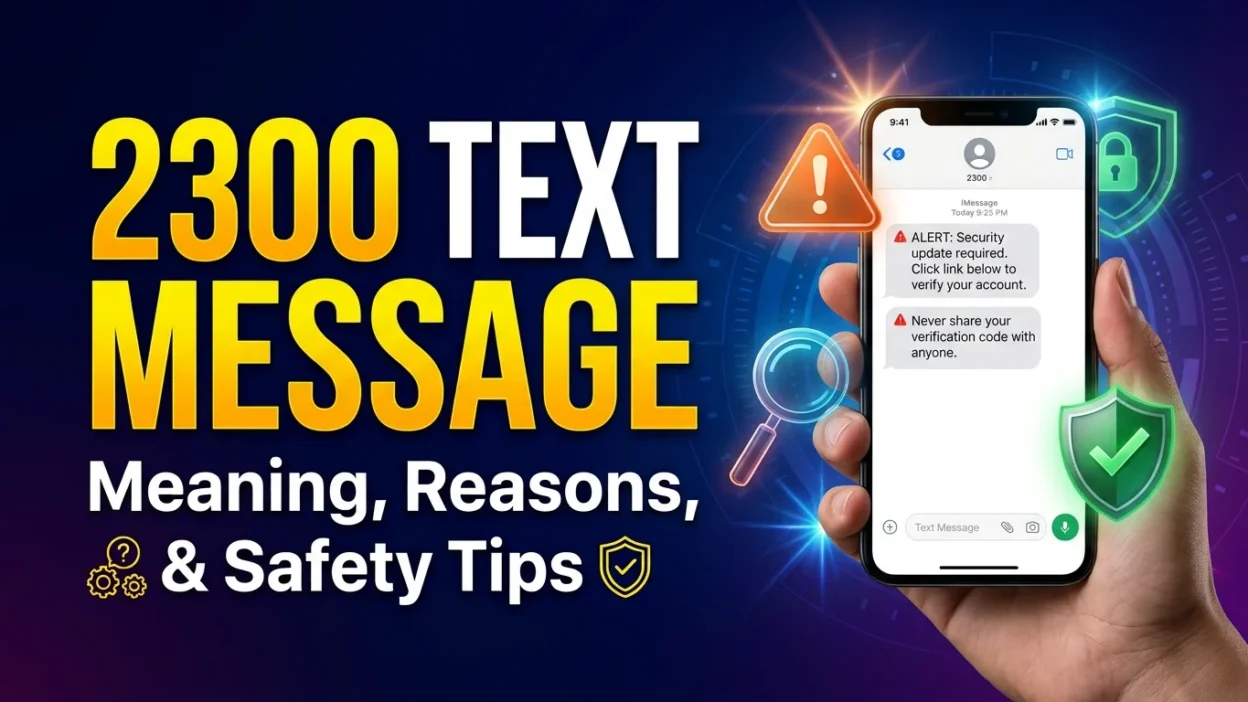
Receiving a text from an unfamiliar number can leave you wondering who sent it and why. If you have received a 2300 text message, you may be trying to identify the sender or understand whether the notification is important.
Short numbers are sometimes used by businesses, mobile networks, and automated messaging services. However, the number alone does not confirm which organization sent the message.
In this guide, you’ll learn about possible reasons for receiving a message from 2300, how to investigate its source, and what to do if it looks suspicious. You’ll also find practical examples to help you contact customer support and protect your personal information.
What Does a 2300 Text Message Mean?
A 2300 text message is a text notification that appears to come from the short number 2300 rather than a traditional mobile phone number.
Short codes are commonly used by organizations to communicate with customers. Depending on the country and mobile carrier, these messages may contain account information, service updates, promotional offers, or automated notifications.
However, there is no universal meaning that applies to every message from 2300.
Here are some possible explanations:
- Service notifications: A company may use automated messaging to provide updates about a service.
- Account alerts: You might receive a notification about an account change or activity.
- Verification messages: Some platforms send temporary codes to confirm a registration or login.
- Promotional messages: Businesses sometimes use short codes to share special offers.
- Subscription updates: The message may relate to a service you previously activated.
- Customer communication: An organization may send information about a request or transaction.
The actual purpose depends on the message content and the organization using the short code.
Why Am I Getting Text Messages From 2300?
An unexpected text message does not always indicate a problem. Sometimes, it arrives because of an action you recently completed or a service connected to your phone number.
For example, you might have signed up for an online account, requested a verification code, or subscribed to a notification service.
Other possible reasons include:
- You recently registered with a website or mobile application.
- A company sent an automated account notification.
- You requested information about a product or service.
- Someone accidentally entered your phone number.
- Your mobile network sent a service-related update.
- You activated a subscription or promotional notification.
- Someone attempted to access an account connected to your number.
If you do not recognize the activity, check your accounts before taking any action.
How to Find Out Who Sent the 2300 Text Message
Identifying an unknown sender is the first step toward understanding whether a notification is genuine.
Although a short number may not display a company name, you can investigate the message using a few simple methods.
- Read the entire message: Look for the organization name, service details, or a recognizable reference.
- Check your recent activities: Review any registrations, purchases, or account changes you recently made.
- Contact your mobile carrier: Ask whether the number is associated with a recognized messaging service.
- Visit official websites: If the message mentions a company, find its contact information independently.
- Review your applications: Check whether a service you use recently sent a notification.
- Search your messages: Look for previous notifications from the same sender that might explain the conversation.
Avoid trusting random websites that claim to identify every short code. Information about short numbers can vary between countries and networks.
What Should I Do If I Receive a 2300 Text Message?
Your response should depend on what the notification says. Some messages require no action, while others may need verification.
If the message is unexpected, take a moment to review it before clicking anything.
Here are some useful steps:
- Do not immediately reply to an unfamiliar number.
- Avoid opening suspicious links.
- Never share your password or banking PIN.
- Do not provide verification codes to strangers.
- Check whether the message relates to an account you own.
- Contact the mentioned company through its official website.
- Ask your mobile provider about unfamiliar charges.
- Block the sender if the messages are unwanted.
Most importantly, do not allow an urgent message to pressure you into making a quick decision.
Ready-to-Use Messages to Ask About an Unknown Text
If you believe a notification came from a company you use, contacting its customer support team can help you understand the situation.
You can use these examples when sending an inquiry through an official support channel.
- Hello, I received a message from 2300. Could you please explain what it means?
- I received an unexpected notification and would like to confirm its sender.
- Can you check whether this message was sent by your organization?
- Please help me understand why I received this text notification.
- I would appreciate some information about the message sent to my phone.
- Could you confirm whether this notification is connected to my account?
- I do not recognize this message. Can you help me investigate it?
- Please let me know whether I need to take any action.
- I would like to verify that this notification is genuine before proceeding.
- Thank you for your help. Please clarify the purpose of this message.
Remember to send these inquiries through verified customer support channels rather than replying directly to an unknown short code.
How to Stop Unwanted Messages From 2300
Repeated notifications can become frustrating, especially when you do not remember signing up for them.
Fortunately, there are several ways to manage unwanted messages.
- Check for unsubscribe instructions: Legitimate promotional notifications may explain how to stop receiving future messages.
- Contact the company: Ask its support team to remove your number from marketing notifications.
- Block the sender: Use your phone’s messaging settings to block unwanted notifications when supported.
- Contact your mobile network: Your provider may help identify or restrict certain messaging services.
- Review subscriptions: Check whether you activated a paid service without realizing it.
- Report suspicious activity: Forward or report suspicious messages according to your carrier’s instructions.
Be careful when using unsubscribe links in messages you cannot verify. An unfamiliar link may expose you to additional risks.
Is a 2300 Text Message Safe or a Scam?
A message from 2300 is not automatically a scam. Legitimate organizations sometimes use short codes for customer notifications and automated communication.
However, scammers can also imitate businesses to make fraudulent messages look convincing.
Pay attention to these warning signs:
- The message asks you to reveal your password.
- It requests your banking information.
- It threatens to suspend your account immediately.
- It demands payment through an unfamiliar link.
- It promises a prize you never entered to win.
- It asks you to share a one-time verification code.
- It contains spelling mistakes and unusual instructions.
- It pressures you to act without checking the information.
If you notice these signs, do not follow the instructions. Contact the organization independently to verify the situation.
Can a 2300 Text Message Be Related to a Subscription?
Yes, a short-code notification may sometimes relate to a subscription or messaging service.
For example, some businesses use automated texts to confirm registrations, provide service information, or notify customers about subscription changes.
If you suspect that a message is connected to a paid service, check your mobile account carefully.
Consider these actions:
- Review your recent mobile billing statements.
- Check whether you have any active subscriptions.
- Look for confirmation messages from services you recently used.
- Contact your carrier to ask about unexpected charges.
- Request cancellation of any subscription you do not recognize.
- Keep confirmation messages after requesting cancellation.
Do not assume that every message represents a paid subscription. Verify the details with your network provider first.
What If You Receive a 2300 Text Message With a Verification Code?
A verification code is usually a temporary security number used to confirm access to an account or complete an online action.
If you receive a code without requesting one, someone may have entered your phone number accidentally or attempted to access an account associated with it.
Here is what you should do:
- Do not share the code with anyone.
- Avoid replying to unexpected requests for the code.
- Check your account for unfamiliar login activity.
- Change your password if you suspect unauthorized access.
- Enable two-factor authentication where available.
- Contact the relevant platform if you notice suspicious activity.
Remember, receiving an unexpected verification code does not automatically mean someone has accessed your account. However, it is worth checking.
How to Protect Yourself From Suspicious Text Messages
Unknown messages are a common part of digital communication. Therefore, developing safe messaging habits can help protect your accounts and personal information.
Follow these practical precautions:
- Never share passwords through text messages.
- Avoid clicking links from unfamiliar senders.
- Do not download unexpected attachments.
- Verify payment requests independently.
- Keep your phone and applications updated.
- Use strong passwords for important accounts.
- Enable security notifications.
- Check your financial accounts regularly.
- Report suspicious messages to your mobile provider.
These simple habits can reduce the risk of falling for phishing attempts and other messaging scams.
What If You Accidentally Responded to a 2300 Text Message?
Accidentally responding to an unfamiliar message can happen. The important thing is to understand what information you shared and whether any action is necessary.
If you only sent a general reply, there may be no immediate problem. However, if you shared sensitive information, take precautions.
- Stop communicating with the unknown sender.
- Change passwords for affected accounts.
- Contact your bank if you disclosed financial details.
- Inform your mobile provider if you shared account information.
- Monitor your accounts for unusual activity.
- Report suspected fraud through appropriate official channels.
- Be cautious of additional messages asking for more information.
Taking action early can help limit potential damage.
Frequently Asked Questions About 2300 Text Messages
What is a 2300 text message?
A 2300 text message is a notification displayed as coming from the short number 2300. Its purpose may vary depending on the mobile network, country, and organization using the number.
Is 2300 a legitimate short code?
It may be a legitimate short code in certain regions or messaging systems. However, you should verify the sender with your mobile carrier rather than assuming the number is genuine.
Should I reply to a text from 2300?
Avoid replying until you know who sent it. If the message appears suspicious, contact your mobile provider or the organization mentioned through an official communication channel.
Can I block messages from 2300?
You may be able to block the sender through your phone’s messaging settings. Your mobile provider may also offer options for managing unwanted messages and subscriptions.
What should I do if 2300 sends me repeated messages?
Check whether the messages relate to a service you use. If you cannot identify the sender, contact your mobile provider and ask for help investigating the notifications.
Conclusion
Receiving a message from 2300 can raise questions, especially when you do not recognize the sender. However, an unfamiliar short number does not automatically mean the message is dangerous.
Take time to understand the notification, verify its source, and avoid sharing sensitive information. If something looks suspicious, contact your mobile provider or the organization through an official channel.
The best approach is to stay informed, protect your personal details, and never rush into responding to an unknown message. A little caution can help keep your digital communication safer.