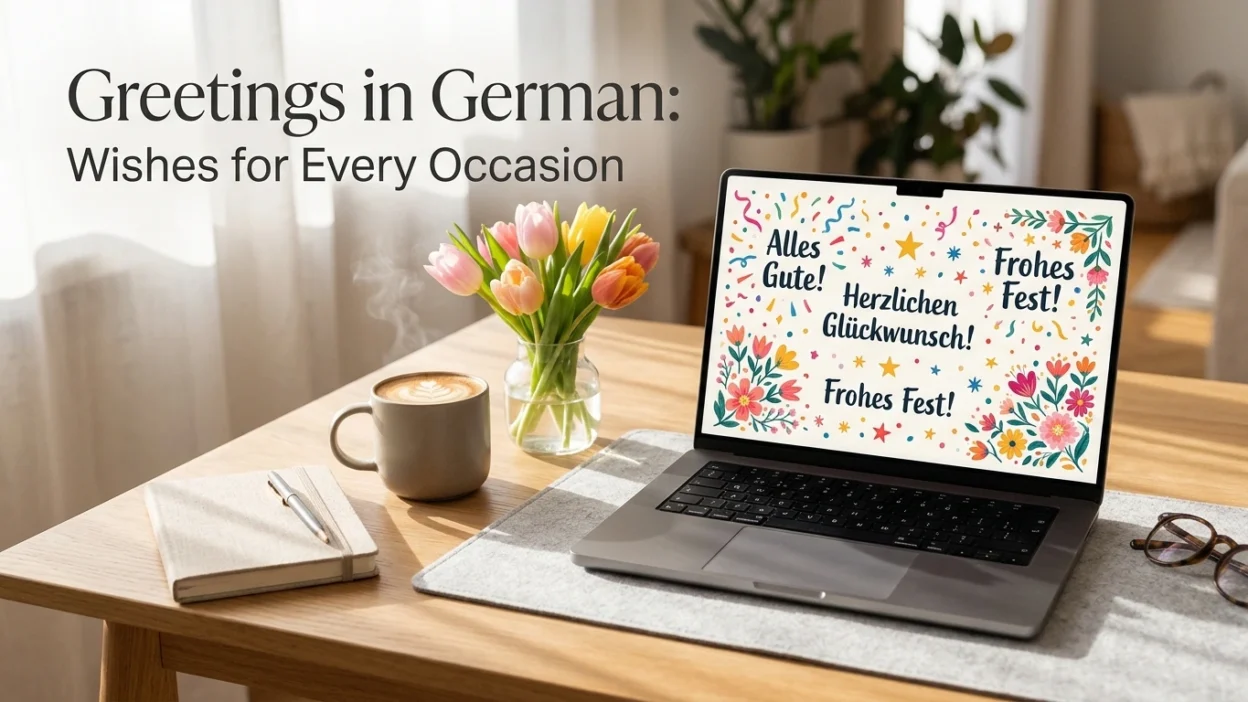
A warm greeting can make someone feel welcome, appreciated, and remembered. Whether you’re learning German, connecting with German-speaking friends, or preparing a message for a special occasion, choosing the right words can make a lovely difference.
German greetings range from simple everyday expressions like Hallo to heartfelt wishes for birthdays, holidays, and meaningful milestones. Some are casual and friendly, while others are more formal and respectful.
In this guide, you’ll find greetings in German with their English meanings, helping you choose the right phrase for every situation. Simply pick your favorite greeting and share it with someone special.
Common German Greetings for Everyday Use
These everyday expressions are useful when meeting friends, starting conversations, or greeting people in German-speaking countries.
- Hallo! — Hello!
- Guten Morgen! — Good morning!
- Guten Tag! — Good day!
- Guten Abend! — Good evening!
- Hi! Wie geht’s? — Hi! How are you?
- Schön, dich zu sehen! — Nice to see you!
- Wie geht es dir? — How are you?
- Alles gut? — Everything good?
- Herzlich willkommen! — A warm welcome!
- Grüß dich! — Greetings! (Informal, used regionally)
German Birthday Greetings
Make someone’s birthday memorable with a cheerful German greeting. These messages are suitable for friends, relatives, partners, and colleagues.
- Alles Gute zum Geburtstag! — Happy Birthday!
- Herzlichen Glückwunsch zum Geburtstag! — Heartfelt birthday wishes!
- Ich wünsche dir einen wunderschönen Geburtstag! — I wish you a wonderful birthday!
- Viel Glück, Gesundheit und Freude im neuen Lebensjahr! — Lots of luck, health, and happiness in your new year of life!
- Möge dein Geburtstag voller Liebe und Lachen sein. — May your birthday be full of love and laughter.
- Lass dich feiern und genieße deinen besonderen Tag! — Let yourself be celebrated and enjoy your special day!
- Alles Liebe und Gute für dein neues Lebensjahr! — All the best and lots of love for your new year of life!
- Ich hoffe, all deine Wünsche gehen in Erfüllung. — I hope all your wishes come true.
- Feiere schön und hab einen fantastischen Tag! — Celebrate and have a fantastic day!
Romantic Greetings in German
German romantic greetings help you express affection, appreciation, and love to your partner or someone special.
- Ich liebe dich. — I love you.
- Du bist mein Ein und Alles. — You are my everything.
- Du machst mein Leben schöner. — You make my life more beautiful.
- Ich denke an dich. — I’m thinking of you.
- Du bist immer in meinem Herzen. — You are always in my heart.
- Ich vermisse dich sehr. — I miss you very much.
- Du bedeutest mir alles. — You mean everything to me.
- Mit dir ist jeder Tag etwas Besonderes. — Every day is special with you.
- Ich bin so glücklich, dich zu haben. — I’m so happy to have you.
German Good Morning Greetings
Start someone’s day with a positive German message. These greetings are perfect for friends, family members, and loved ones.
- Guten Morgen! Ich wünsche dir einen schönen Tag. — Good morning! I wish you a beautiful day.
- Ich hoffe, du hast gut geschlafen. — I hope you slept well.
- Hab einen wundervollen Start in den Tag! — Have a wonderful start to your day!
- Möge dein Tag voller Freude sein. — May your day be full of happiness.
- Guten Morgen, Sonnenschein! — Good morning, sunshine!
- Ich wünsche dir einen erfolgreichen und glücklichen Tag. — I wish you a successful and happy day.
- Lächle und genieße den neuen Tag! — Smile and enjoy the new day!
- Einen wunderschönen guten Morgen! — A very beautiful good morning!
German Good Night Wishes
Use these phrases to say good night to friends, family, or someone you love before ending the day.
- Gute Nacht! — Good night!
- Schlaf gut! — Sleep well!
- Süße Träume! — Sweet dreams!
- Träum etwas Schönes! — Dream of something beautiful!
- Ich wünsche dir eine erholsame Nacht. — I wish you a restful night.
- Schlaf schön und träum von mir. — Sleep well and dream of me.
- Möge deine Nacht friedlich und ruhig sein. — May your night be peaceful and calm.
- Bis morgen! Schlaf gut. — See you tomorrow! Sleep well.
German Holiday Greetings
Holiday greetings help you share happiness and goodwill during festive seasons with German-speaking friends and relatives.
- Frohe Weihnachten! — Merry Christmas!
- Frohe Ostern! — Happy Easter!
- Ein frohes neues Jahr! — Happy New Year!
- Frohe Feiertage! — Happy holidays!
- Schöne Feiertage und alles Gute! — Happy holidays and all the best!
- Ich wünsche dir ein glückliches und gesundes neues Jahr. — I wish you a happy and healthy New Year.
- Ein gesegnetes Weihnachtsfest! — A blessed Christmas!
- Viel Freude und Frieden in dieser festlichen Zeit! — Much joy and peace during this festive season!
German Greetings for Friends
These casual and affectionate greetings are ideal for staying in touch with friends and letting them know you’re thinking about them.
- Hey, wie läuft’s? — Hey, how’s it going?
- Schön, dass es dich gibt! — I’m glad you exist!
- Ich hoffe, dir geht es gut. — I hope you’re doing well.
- Lass uns bald wieder treffen! — Let’s meet again soon!
- Pass gut auf dich auf! — Take good care of yourself!
- Du bist ein toller Freund! — You’re a great friend!
- Ich schicke dir liebe Grüße! — Sending you warm greetings!
- Bleib so, wie du bist! — Stay just the way you are!
Formal German Greetings for Work and Business
In professional settings, German greetings are often more formal. Use these expressions when meeting clients, addressing colleagues you don’t know well, or writing professional emails.
- Guten Tag, Herr Müller. — Good day, Mr. Müller.
- Guten Tag, Frau Schneider. — Good day, Ms. Schneider.
- Sehr geehrte Damen und Herren, — Dear Sir or Madam,
- Sehr geehrte Frau Müller, — Dear Ms. Müller,
- Sehr geehrter Herr Schmidt, — Dear Mr. Schmidt,
- Freut mich, Sie kennenzulernen. — Pleased to meet you.
- Ich wünsche Ihnen einen schönen Tag. — I wish you a nice day.
- Mit freundlichen Grüßen — Kind regards / Yours sincerely.
German Congratulations and Best Wishes
Celebrate achievements, new beginnings, and exciting life events with these thoughtful German expressions.
- Herzlichen Glückwunsch! — Congratulations!
- Viel Erfolg! — Good luck and success!
- Alles Gute für die Zukunft! — All the best for the future!
- Ich wünsche dir viel Glück. — I wish you lots of luck.
- Viel Erfolg bei deiner neuen Aufgabe! — Good luck with your new role!
- Herzlichen Glückwunsch zur Hochzeit! — Congratulations on your wedding!
- Alles Gute zur Geburt eures Babys! — Best wishes on the birth of your baby!
- Ich wünsche dir nur das Beste! — I wish you nothing but the best!
German Greetings for Special Moments
Sometimes a short, thoughtful phrase is all you need to show kindness, offer support, or reconnect with someone.
- Vielen Dank! — Thank you very much!
- Gute Besserung! — Get well soon!
- Es tut mir leid. — I’m sorry.
- Viel Glück für deine Prüfung! — Good luck with your exam!
- Herzliches Beileid. — My heartfelt condolences.
- Alles wird gut. — Everything will be okay.
- Ich wünsche dir ganz viel Kraft. — I wish you lots of strength.
- Liebe Grüße an deine Familie! — Warm greetings to your family!
- Mach’s gut! — Take care! / All the best!
- Bis bald! — See you soon!
Tips for Using German Greetings Correctly
Choosing the right greeting depends on the person, the situation, and how formal you want to sound.
- Use “du” with people you know well. This informal form means “you” and is common among friends, family, and many peers.
- Use “Sie” in formal situations. It is the polite form of “you,” often appropriate for business contacts, unfamiliar adults, and formal interactions.
- Pay attention to the time of day. Guten Morgen means good morning, Guten Tag means good day, and Guten Abend means good evening.
- Know the difference between greetings and farewells. Hallo is used to say hello, while Auf Wiedersehen means goodbye in a formal context.
- Match the tone to your relationship. Romantic phrases may be appropriate for a partner but not for a professional contact.
- Learn the pronunciation. Listening to native speakers can help you sound more natural and understand regional variations.
Frequently Asked Questions
What is the most common greeting in German?
Hallo is one of the most common everyday greetings in German. For a more formal greeting, you can use Guten Tag, which means “Good day.”
How do you say “How are you?” in German?
You can say Wie geht es dir? when speaking informally to one person. In a formal situation, use Wie geht es Ihnen?
How do you say “Best wishes” in German?
Alles Gute is a common way to express best wishes. Depending on the situation, you can also say Ich wünsche dir alles Gute, meaning “I wish you all the best.”
How do you greet someone formally in German?
Use Guten Tag when meeting someone formally. In a professional email, you can begin with Sehr geehrte Frau … or Sehr geehrter Herr …, followed by the person’s surname.
How do you say goodbye in German?
Auf Wiedersehen is a polite, formal way to say goodbye. Among friends, Tschüss is common and casual, while Bis bald means “See you soon.”
Conclusion
Learning greetings in German is a simple way to build connections, show respect, and communicate more confidently.
From everyday hellos to romantic wishes and professional greetings, each expression helps you share the right message for the occasion.
Use the translations in this guide to understand the meaning behind each phrase and choose words that fit your relationship with the recipient.
Save your favorite greetings, practice them regularly, and share them with German-speaking friends, family, or colleagues.
A few thoughtful words in someone’s language can make a conversation feel warmer and more personal.