
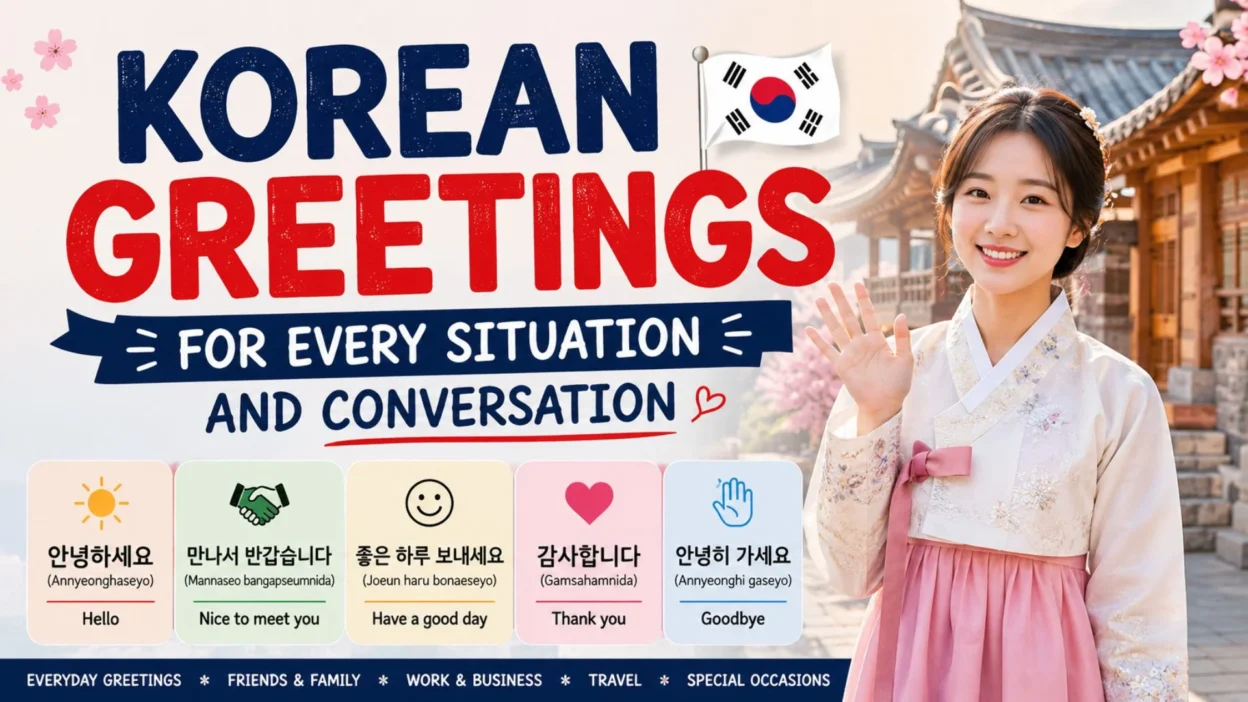
Korean greetings are more than simple words. They show respect, kindness, and genuine interest in the other person. Whether you’re learning Korean, traveling to South Korea, talking with Korean friends, or simply curious about Korean culture, finding the right greeting can sometimes feel confusing.
The good news is that you don’t need to memorize hundreds of phrases. A few thoughtful Korean greetings can help you start conversations naturally and leave a positive impression.
In this guide, you’ll find practical Korean greetings for everyday situations, formal meetings, close friendships, and first introductions. Each greeting includes its meaning so you can confidently choose the right one and use it immediately.
Everyday Korean Greetings You Can Use Daily
These are some of the most useful Korean greetings you’ll hear in everyday life. They’re perfect for school, work, shopping, and casual conversations.
- 안녕하세요 (Annyeonghaseyo) — Hello. The most common and polite Korean greeting.
- 좋은 하루 보내세요 (Joeun haru bonaeseyo) — Have a wonderful day.
- 잘 지내세요? (Jal jinaeseyo?) — How have you been?
- 오늘 기분이 어떠세요? (Oneul gibuni eotteoseyo?) — How are you feeling today?
- 반갑습니다 (Bangapseumnida) — Nice to meet you.
- 안녕히 가세요 (Annyeonghi gaseyo) — Goodbye to someone who is leaving.
- 안녕히 계세요 (Annyeonghi gyeseyo) — Goodbye to someone staying behind.
- 오랜만이에요 (Oraenmanieyo) — Long time no see.
- 좋은 아침이에요 ☀️ (Joeun achimieyo) — Good morning.
Korean Greetings for Meeting Someone New
First impressions matter. These greetings help create a warm and respectful connection when meeting someone for the first time.
- 만나서 반갑습니다 (Mannaseo bangapseumnida) — It’s a pleasure to meet you.
- 처음 뵙겠습니다 (Cheoeum boepgetsseumnida) — Nice to meet you for the first time.
- 소개받아 기쁩니다 (Sogaebada gippeumnida) — I’m happy to be introduced to you.
- 만나게 되어 영광입니다 (Mannage doeeo yeonggwangimnida) — It’s an honor to meet you.
- 좋은 이야기를 많이 들었습니다 (Joeun iyagireul mani deureotseumnida) — I’ve heard many good things about you.
- 앞으로 잘 부탁드립니다 😊 (Apeuro jal butakdeurimnida) — I look forward to working with you.
- 함께 알게 되어 기쁩니다 (Hamkke alge doeeo gippeumnida) — I’m glad to get to know you.
- 오늘 만나서 정말 반가웠습니다 (Oneul mannaseo jeongmal bangawotseumnida) — It was wonderful meeting you today.
- 좋은 인연이 되길 바랍니다 (Joeun inyeoni doegil baramnida) — I hope we build a good relationship.
- 만나 뵙게 되어 감사합니다 (Manna boepge doeeo gamsahamnida) — Thank you for meeting with me.
- 앞으로 자주 뵙겠습니다 (Apeuro jaju boepgetsseumnida) — I hope to see you often in the future.
Friendly Korean Greetings for Close Friends

When talking with friends, Korean greetings become more relaxed and casual. These phrases help conversations feel warm and natural.
- 안녕! (Annyeong!) — Hi!
- 잘 지냈어? (Jal jinaesseo?) — How have you been?
- 오랜만이다! (Oraenmanida!) — Long time no see!
- 오늘 어때? (Oneul eottae?) — How’s your day going?
- 반가워! 😄 (Bangawo!) — Nice to see you!
- 뭐 하고 있었어? (Mwo hago isseosseo?) — What have you been doing?
- 잘 왔어! (Jal wasseo!) — Glad you’re here!
- 보고 싶었어 (Bogo sipeosseo) — I missed you.
- 좋은 하루 보내고 있어? (Joeun haru bonaego isseo?) — Are you having a good day?
- 만나서 너무 좋아 (Mannaseo neomu joa) — So happy to see you.
- 오늘 정말 반갑다 (Oneul jeongmal bangapda) — Really great seeing you today.
- 같이 이야기하자 (Gachi iyagihaja) — Let’s chat together.
Respectful Korean Greetings for Elders
Respect is an important part of Korean culture. These greetings are suitable when speaking with older people, teachers, or respected individuals.
Before using these greetings, remember that polite language is always appreciated in Korean culture.
- 안녕하세요, 건강하셨습니까? (Annyeonghaseyo, geonganghasyeosseumnikka?) — Hello, have you been well?
- 좋은 하루 되십시오 (Joeun haru doesipsio) — Have a pleasant day.
- 오랜만에 뵙습니다 (Oraenmane boepseumnida) — It’s been a long time since I’ve seen you.
- 항상 건강하시길 바랍니다 🙏 (Hangsang geonganghasigil baramnida) — I wish you continued good health.
- 만나 뵙게 되어 반갑습니다 (Manna boepge doeeo bangapseumnida) — I’m pleased to meet you.
- 오늘도 좋은 하루 보내십시오 (Oneuldo joeun haru bonaesipsio) — Have a wonderful day today.
- 평안하셨습니까? (Pyeonganhasyeosseumnikka?) — Have you been at peace?
- 늘 감사드립니다 (Neul gamsadeurimnida) — I’m always grateful.
- 건강과 행복이 함께하시길 바랍니다 (Geonganggwa haengbogi hamkkehasigil baramnida) — Wishing you health and happiness.
- 뵙게 되어 영광입니다 (Boepge doeeo yeonggwangimnida) — It is an honor to see you.
Why These Korean Greetings Matter
The right greeting can instantly make someone feel respected, welcomed, and appreciated. In Korean culture, greetings often reflect the relationship between people, their age, and the situation. Learning a few thoughtful phrases can help you communicate more naturally and build stronger connections.
In the next part, we’ll cover Korean greetings for work, texting, travel, special occasions, and social media conversations.
Korean Greetings for Work, Travel, and Digital Conversations
Knowing basic Korean greetings is helpful, but real-life situations often require something more specific. Whether you’re sending a message to a coworker, greeting someone during a trip, or chatting online, choosing the right words can make communication smoother and more meaningful.
The following Korean greetings are organized around common situations people face every day. You can copy them directly or use them as inspiration for your own conversations.
Professional Korean Greetings for Workplace Communication
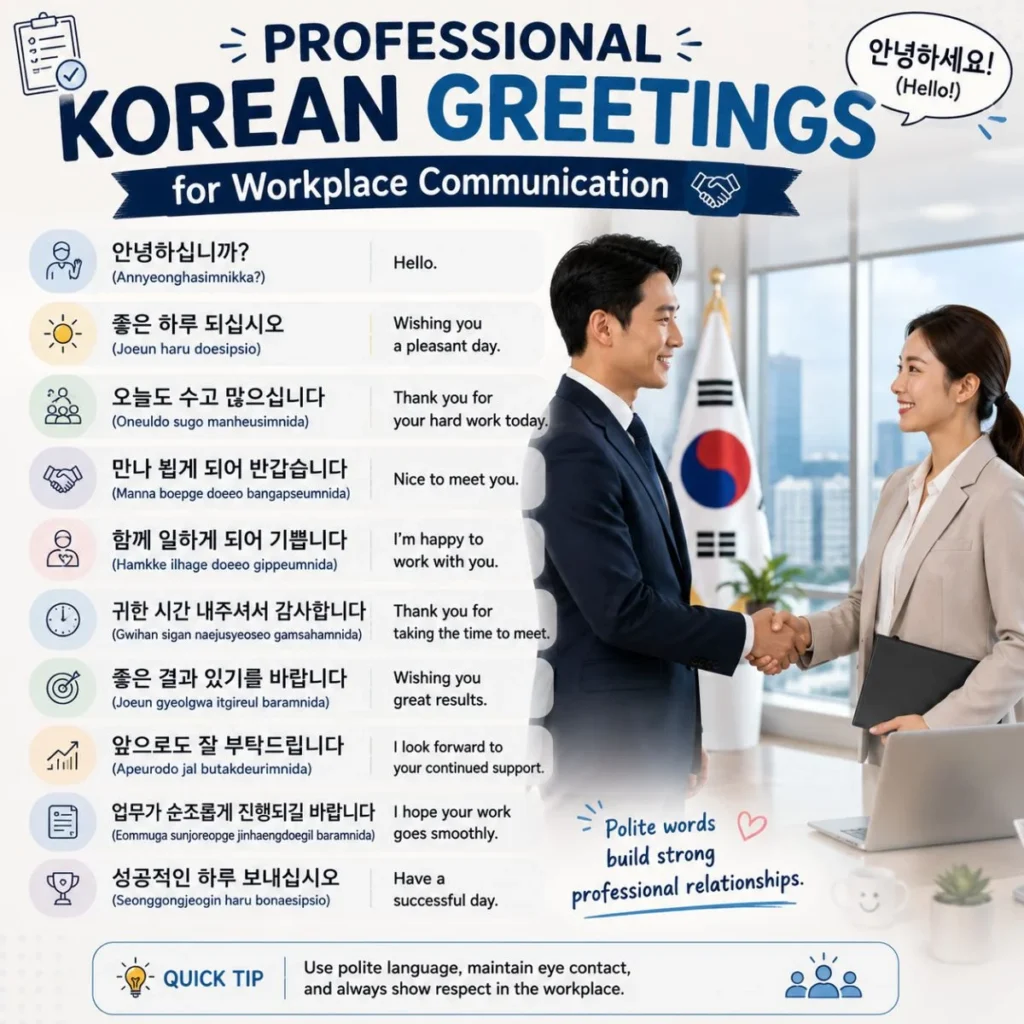
Business environments in Korea often emphasize politeness and professionalism. These greetings help you communicate respectfully with colleagues, managers, clients, and business partners.
- 안녕하십니까? (Annyeonghasimnikka?) — Hello. A highly formal greeting often used in business settings.
- 좋은 하루 되십시오 (Joeun haru doesipsio) — Wishing you a pleasant day.
- 오늘도 수고 많으십니다 (Oneuldo sugo manheusimnida) — Thank you for your hard work today.
- 만나 뵙게 되어 반갑습니다 (Manna boepge doeeo bangapseumnida) — Nice to meet you.
- 함께 일하게 되어 기쁩니다 (Hamkke ilhage doeeo gippeumnida) — I’m happy to work with you.
- 귀한 시간 내주셔서 감사합니다 (Gwihan sigan naejusyeoseo gamsahamnida) — Thank you for taking the time to meet.
- 좋은 결과 있기를 바랍니다 📈 (Joeun gyeolgwa itgireul baramnida) — Wishing you great results.
- 앞으로도 잘 부탁드립니다 (Apeurodo jal butakdeurimnida) — I look forward to your continued support.
- 업무가 순조롭게 진행되길 바랍니다 (Eommuga sunjoreopge jinhaengdoegil baramnida) — I hope your work goes smoothly.
- 성공적인 하루 보내십시오 (Seonggongjeogin haru bonaesipsio) — Have a successful day.
Korean Greetings Perfect for Text Messages
Texting is often more casual than face-to-face communication. These greetings feel natural in messages, social apps, and online chats.
- 안녕! 오늘 잘 지내? (Annyeong! Oneul jal jinae?) — Hi! How are you today?
- 좋은 아침이야 ☀️ (Joeun achimiya) — Good morning.
- 오늘 하루도 화이팅! (Oneul harudo hwaiting!) — Have a great day!
- 잘 잤어? (Jal jasseo?) — Did you sleep well?
- 점심 맛있게 먹어! (Jeomsim masitge meogeo!) — Enjoy your lunch!
- 오늘도 행복하길 바라 (Oneuldo haengbokhagil bara) — Hope you have a happy day.
- 좋은 저녁 보내 (Joeun jeonyeok bonae) — Have a nice evening.
- 연락 줘서 고마워 (Yeollak jwoseo gomawo) — Thanks for reaching out.
- 잘 들어갔어? (Jal deureogasseo?) — Did you get home safely?
- 좋은 꿈 꿔 🌙 (Joeun kkum kkwo) — Sweet dreams.
- 오늘도 웃는 하루 보내 (Oneuldo utneun haru bonae) — Have a day full of smiles.
- 네 생각이 났어 (Ne saenggagi nasseo) — I was thinking about you.
Korean Greetings for Travelers Visiting Korea
Travel becomes easier when you know a few local greetings. These phrases can help you connect with locals and show respect for Korean culture.
Before your trip, practicing simple greetings can make interactions much more comfortable.
- 안녕하세요 (Annyeonghaseyo) — Hello.
- 감사합니다 (Gamsahamnida) — Thank you.
- 만나서 반갑습니다 (Mannaseo bangapseumnida) — Nice to meet you.
- 좋은 하루 보내세요 (Joeun haru bonaeseyo) — Have a good day.
- 실례합니다 (Sillyehamnida) — Excuse me.
- 처음 한국에 왔어요 (Cheoeum Hangug-e wasseoyo) — It’s my first time in Korea.
- 한국이 정말 아름답네요 🇰🇷 (Hangugi jeongmal areumdapneyo) — Korea is really beautiful.
- 도움 주셔서 감사합니다 (Doum jusyeoseo gamsahamnida) — Thank you for your help.
- 다시 만나길 바랍니다 (Dasi mannagil baramnida) — I hope we meet again.
- 좋은 여행 되세요 (Joeun yeohaeng doeseyo) — Have a wonderful trip.
Warm Korean Greetings for Family Members
Family greetings often feel more personal and affectionate. These phrases work well for daily conversations with loved ones.
- 좋은 아침이에요 (Joeun achimieyo) — Good morning.
- 오늘도 행복하세요 ❤️ (Oneuldo haengbokhaseyo) — Wishing you happiness today.
- 건강하게 지내세요 (Geonganghage jinaeseyo) — Stay healthy.
- 집에 와서 반가워요 (Jibe waseo bangawoyo) — Happy you’re home.
- 식사는 하셨어요? (Siksaneun hasyeosseoyo?) — Have you eaten?
- 편안한 하루 보내세요 (Pyeonanhan haru bonaeseyo) — Have a peaceful day.
- 늘 응원하고 있어요 (Neul eungwonhago isseoyo) — I’m always cheering for you.
- 가족과 행복한 시간 보내세요 (Gajokgwa haengbokhan sigan bonaeseyo) — Enjoy time with your family.
- 오늘도 힘내세요 (Oneuldo himnaeseyo) — Stay strong today.
- 사랑과 웃음이 가득한 하루 되세요 😊 (Saranggwa useumi gadeukhan haru doeseyo) — Have a day filled with love and laughter.
Korean Greetings for Social Media and Online Friends
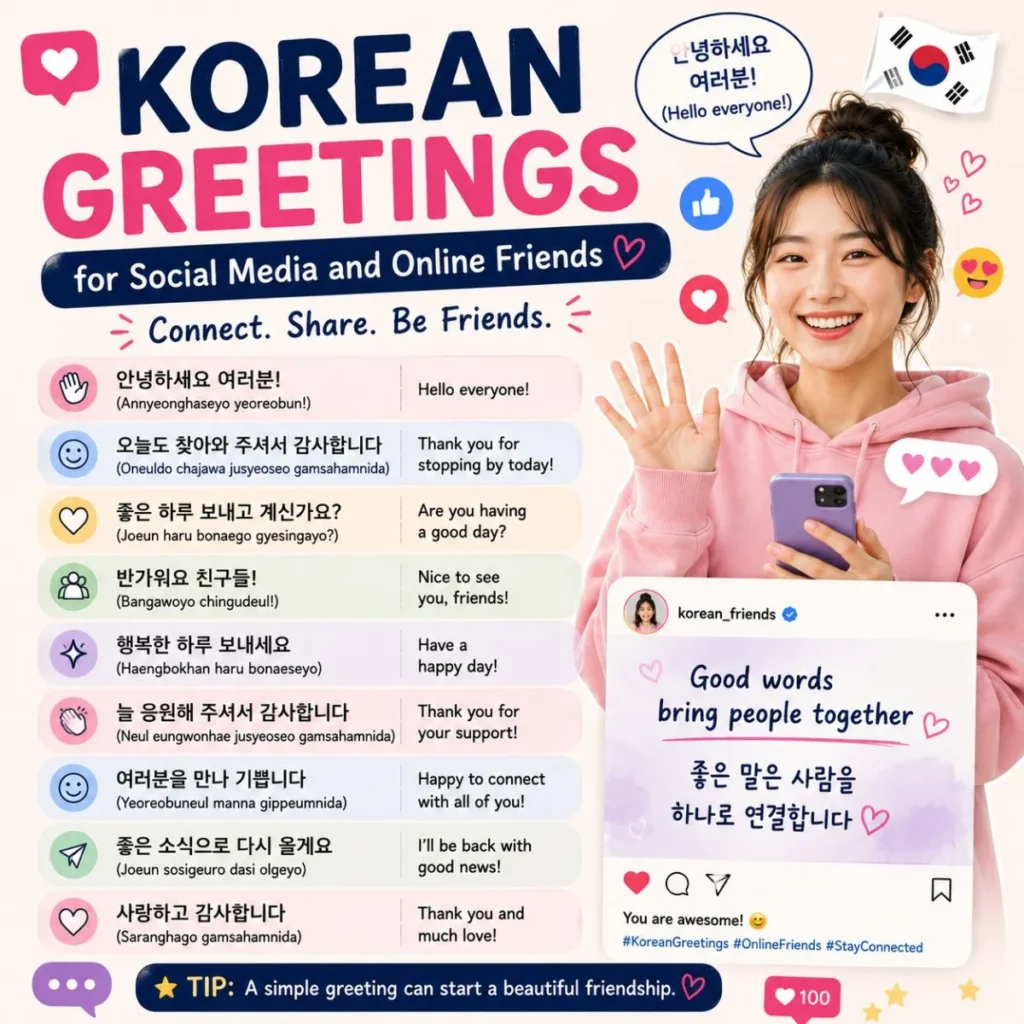
Social media interactions are often short and friendly. These greetings help start conversations naturally.
- 안녕하세요 여러분! (Annyeonghaseyo yeoreobun!) — Hello everyone!
- 오늘도 찾아와 주셔서 감사합니다 (Oneuldo chajawa jusyeoseo gamsahamnida) — Thanks for stopping by today.
- 좋은 하루 보내고 계신가요? (Joeun haru bonaego gyesingayo?) — Are you having a good day?
- 반가워요 친구들! (Bangawoyo chingudeul!) — Nice to see you, friends!
- 행복한 하루 보내세요 (Haengbokhan haru bonaeseyo) — Have a happy day.
- 늘 응원해 주셔서 감사합니다 (Neul eungwonhae jusyeoseo gamsahamnida) — Thanks for your constant support.
- 여러분을 만나 기쁩니다 (Yeoreobuneul manna gippeumnida) — Happy to connect with all of you.
- 좋은 소식으로 다시 올게요 ✨ (Joeun sosigeuro dasi olgeyo) — I’ll be back with good news.
Quick Tip for Choosing the Right Korean Greeting
A simple rule can save you from confusion:
- Use 안녕하세요 (Annyeonghaseyo) when you’re unsure.
- Use formal greetings for elders, teachers, clients, and business contacts.
- Use casual greetings only with close friends and people your age.
- Add kind wishes such as “Have a good day” or “Stay healthy” to make your greeting feel warmer and more personal.
Korean Greetings for Special Moments and Celebrations
Some greetings are designed for everyday conversations, while others are perfect for meaningful occasions. Whether you’re celebrating a holiday, sending morning wishes, congratulating someone, or expressing heartfelt support, the right Korean greeting can make your message more memorable.
The greetings below help you communicate warmth, encouragement, and respect during life’s important moments.
Korean Greetings for Good Morning Messages
Morning greetings are among the most commonly used messages. They help start the day with positivity and care.
- 좋은 아침입니다 ☀️ (Joeun achimimnida) — Good morning.
- 오늘도 행복한 하루 되세요 (Oneuldo haengbokhan haru doeseyo) — Have a happy day today.
- 밝은 미소로 하루를 시작하세요 (Balgeun misoro harureul sijakhaseyo) — Start your day with a bright smile.
- 좋은 일만 가득하길 바랍니다 (Joeun ilman gadeukagil baramnida) — Wishing you a day full of good things.
- 건강하고 즐거운 하루 보내세요 (Geonganghago jeulgeoun haru bonaeseyo) — Have a healthy and joyful day.
- 오늘도 힘차게 시작하세요 💪 (Oneuldo himchage sijakhaseyo) — Start your day with energy.
- 행복이 가득한 아침 되세요 (Haengbogi gadeukhan achim doeseyo) — Have a morning filled with happiness.
- 오늘도 좋은 소식이 있길 바랍니다 (Oneuldo joeun sosigi itgil baramnida) — Hope good news finds you today.
- 따뜻한 하루 보내세요 (Ttatteuthan haru bonaeseyo) — Have a warm and pleasant day.
Korean Greetings for Birthdays and Celebrations
Celebrations become more meaningful when accompanied by thoughtful words.
- 생일 축하합니다 🎂 (Saengil chukhahamnida) — Happy Birthday.
- 행복한 생일 보내세요 (Haengbokhan saengil bonaeseyo) — Have a wonderful birthday.
- 소원이 모두 이루어지길 바랍니다 (Sowoni modu irueojigil baramnida) — May all your wishes come true.
- 특별한 하루 되세요 (Teukbyeolhan haru doeseyo) — Have a special day.
- 건강과 행복이 함께하길 바랍니다 (Geonganggwa haengbogi hamkkehagil baramnida) — Wishing you health and happiness.
- 오늘의 주인공은 당신입니다 (Oneurui juingongeun dangsinimnida) — Today is your special day.
- 기쁨으로 가득한 하루 보내세요 (Gippeumeuro gadeukhan haru bonaeseyo) — Enjoy a day filled with joy.
- 축하드리며 행복을 기원합니다 (Chukhadeurimyeo haengbogeul giwonhamnida) — Congratulations and best wishes.
- 멋진 추억 많이 만드세요 (Meotjin chueok mani mandeuseyo) — Create wonderful memories today.
- 웃음이 가득한 하루 되세요 😊 (Useumi gadeukhan haru doeseyo) — May your day be filled with smiles.
Korean Greetings for Holidays and Festivals
Holiday greetings help people share joy and celebrate together.
- 즐거운 명절 보내세요 (Jeulgeoun myeongjeol bonaeseyo) — Have a wonderful holiday.
- 행복한 연휴 되세요 (Haengbokhan yeonhyu doeseyo) — Enjoy your holiday break.
- 가족과 좋은 시간 보내세요 (Gajokgwa joeun sigan bonaeseyo) — Enjoy quality time with family.
- 새해 복 많이 받으세요 🎉 (Saehae bok mani badeuseyo) — Happy New Year.
- 기쁨과 평화가 함께하길 바랍니다 (Gippeumgwa pyeonghwaga hamkkehagil baramnida) — Wishing you joy and peace.
- 뜻깊은 명절 보내세요 (Tteutgipeun myeongjeol bonaeseyo) — Have a meaningful holiday.
- 사랑과 행복이 가득하길 바랍니다 (Saranggwa haengbogi gadeukagil baramnida) — May your life be filled with love and happiness.
- 좋은 추억 많이 만드세요 (Joeun chueok mani mandeuseyo) — Create many wonderful memories.
Korean Greetings for Encouragement and Support
Sometimes people need comfort more than celebration. These greetings help express care and encouragement.
- 힘내세요 💙 (Himnaeseyo) — Stay strong.
- 잘 해낼 수 있을 거예요 (Jal haenael su isseul geoyeyo) — You can do it.
- 항상 응원하고 있습니다 (Hangsang eungwonhago itseumnida) — I’m always supporting you.
- 좋은 결과가 있을 거예요 (Joeun gyeolgwaga isseul geoyeyo) — Good results will come.
- 포기하지 마세요 (Pogihaji maseyo) — Don’t give up.
- 당신을 믿습니다 (Dangsineul mideumnida) — I believe in you.
- 모든 일이 잘 되길 바랍니다 (Modeun iri jal doegil baramnida) — I hope everything goes well.
- 어려움은 곧 지나갈 거예요 (Eoryeoumeun got jinagal geoyeyo) — Difficult times will pass.
- 희망을 잃지 마세요 (Huimangeul ilji maseyo) — Don’t lose hope.
- 내일은 더 좋은 날이 될 거예요 ✨ (Naeireun deo joeun nari doel geoyeyo) — Tomorrow will be a better day.
Korean Greetings for Saying Goodbye
Goodbyes can be warm, respectful, and memorable when expressed thoughtfully.
- 안녕히 가세요 (Annyeonghi gaseyo) — Goodbye, travel safely.
- 안녕히 계세요 (Annyeonghi gyeseyo) — Goodbye, take care.
- 다음에 또 만나요 (Daeume tto mannayo) — See you next time.
- 좋은 하루 보내세요 (Joeun haru bonaeseyo) — Have a great day.
- 조심히 들어가세요 (Josimhi deureogaseyo) — Get home safely.
- 건강히 지내세요 (Geonganghi jinaeseyo) — Stay healthy.
- 곧 다시 뵙겠습니다 (Got dasi boepgetsseumnida) — See you again soon.
- 행복한 시간 보내세요 😊 (Haengbokhan sigan bonaeseyo) — Enjoy your time.
- 좋은 일만 가득하길 바랍니다 (Joeun ilman gadeukagil baramnida) — Wishing you many good things ahead.
- 또 연락드리겠습니다 (Tto yeollakdeurigetseumnida) — I’ll contact you again soon.
FAQ Section
1. What is the most common Korean greeting?
The most common Korean greeting is 안녕하세요 (Annyeonghaseyo). It means “Hello” and works in most situations.
2. How do Koreans greet elders?
Koreans usually use polite and formal greetings such as 안녕하세요, 안녕하십니까, or respectful phrases that show courtesy.
3. Can I use 안녕 with everyone?
No. 안녕 (Annyeong) is casual and should generally be used with close friends, family members, or people of a similar age.
4. What is the Korean way to say “Nice to meet you”?
The most common phrase is 만나서 반갑습니다 (Mannaseo bangapseumnida).
5. What Korean greeting should tourists learn first?
Tourists should start with 안녕하세요 (Hello) and 감사합니다 (Thank You) because they are useful almost everywhere.
Conclusion
Learning Korean greetings is one of the easiest ways to connect with Korean speakers and better understand Korean culture. Whether you’re greeting a friend, meeting someone new, traveling, or sending a thoughtful message, the right phrase can instantly make your conversation feel warmer and more respectful.
The greetings in this guide are practical, easy to copy, and suitable for real-life situations. Start with a few common phrases, use them regularly, and you’ll quickly feel more confident in your Korean conversations.
A simple greeting can open the door to meaningful friendships, memorable experiences, and stronger connections across cultures.