
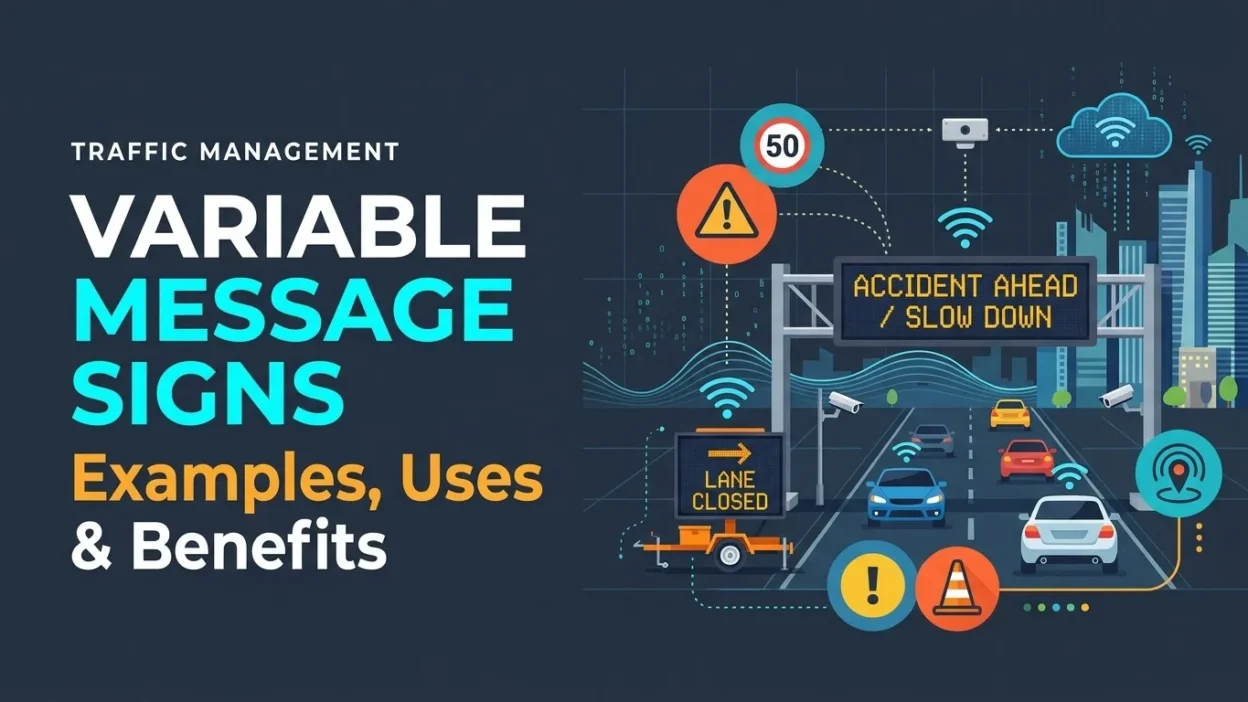
Have you ever seen an electronic sign on a highway displaying information about traffic, road closures, or weather conditions? These signs help drivers make safer and smarter decisions while traveling.
Variable message signs are electronic displays that provide real-time traffic information, safety warnings, and important road updates. They are commonly found on highways, busy roads, tunnels, and urban traffic networks.
Whether you’re a driver, traffic management professional, or someone learning about intelligent transportation systems, understanding these signs can help you recognize their importance.
In this guide, we’ll explore how variable message signs work, their different types, common messages, and how they improve road safety.
What Are Variable Message Signs?
Variable message signs (VMS) are electronic traffic signs that display changing information to road users.
Unlike traditional road signs, which show fixed instructions, variable message signs can display different messages depending on current traffic conditions, road incidents, weather, or planned events.
These signs are often controlled remotely by traffic management centers. Operators can update the displayed information whenever necessary.
Common information displayed on variable message signs includes:
- Traffic congestion and delays
- Road closures and diversions
- Accidents and emergency warnings
- Weather conditions
- Speed restrictions
- Construction work
- Travel time estimates
- Safety reminders
Variable message signs are an important part of intelligent transportation systems because they help drivers receive timely information before reaching a potential hazard.
How Do Variable Message Signs Work?
Variable message signs use electronic technology to display information that can change according to road conditions.
Most systems include several important components that work together to deliver accurate messages.
Electronic Display
The display is the visible part of the sign. It uses LED technology or other electronic display systems to show text, symbols, and traffic information.
LED displays are popular because they are bright, energy-efficient, and easy to read in different lighting conditions.
Traffic Monitoring Systems
Traffic management systems collect information from road sensors, cameras, weather stations, and other monitoring equipment.
This information helps operators understand current road conditions and determine which messages should be displayed.
Communication Network
A communication network connects the signs to a central traffic management system.
This allows authorized operators to update messages remotely without physically visiting each sign.
Control Software
Control software helps operators select, schedule, and manage messages.
Some advanced systems can also use automated traffic data to recommend or trigger specific warnings.
Power Supply
Variable message signs require a reliable power source. Depending on their location, they may use electricity, solar power, or backup batteries.
Common Variable Message Signs Examples
Variable message signs display different messages depending on the situation. Here are some common examples that drivers may encounter.
Traffic Congestion Messages
These signs warn drivers about slow-moving traffic and delays ahead.
- SLOW TRAFFIC AHEAD
- EXPECT DELAYS
- HEAVY TRAFFIC NEXT 5 MILES
- CONGESTION AHEAD
- ALLOW EXTRA TRAVEL TIME
- TRAFFIC SLOWING DOWN
- USE ALTERNATE ROUTE
- EXPECT 20 MINUTE DELAY
These messages help drivers prepare for changing traffic conditions and make informed route decisions.
Road Closure Messages
Road closure signs inform drivers when a road or lane is unavailable.
- ROAD CLOSED AHEAD
- EXIT CLOSED
- LEFT LANE CLOSED
- RIGHT LANE CLOSED
- ALL LANES CLOSED
- USE DETOUR
- ROAD CLOSED DUE TO FLOODING
- FOLLOW DETOUR SIGNS
Clear closure messages help reduce confusion and encourage drivers to follow safe alternative routes.
Accident and Emergency Messages
Emergency messages warn drivers about incidents that may affect road safety.
- ACCIDENT AHEAD
- EMERGENCY VEHICLES AHEAD
- INCIDENT AHEAD
- SLOW DOWN
- EXPECT STOPPED TRAFFIC
- MOVE OVER FOR EMERGENCY VEHICLES
- KEEP CLEAR OF INCIDENT AREA
- FOLLOW POLICE DIRECTIONS
These messages are particularly important when emergency responders are working near traffic.
Weather Warning Messages
Weather conditions can change quickly, making timely warnings essential.
- FOG AHEAD
- REDUCE SPEED
- SLIPPERY ROAD
- HEAVY RAIN AHEAD
- STRONG WINDS AHEAD
- ICE POSSIBLE
- FLOODING AHEAD
- USE LOW BEAM HEADLIGHTS
Weather-related variable message signs help drivers adjust their speed and driving behavior to match road conditions.
Variable Message Signs for Road Safety
Road safety messages remind drivers to follow safe driving practices and pay attention to potential hazards.
These signs are especially useful during busy travel periods, adverse weather, and road construction.
Examples include:
- DRIVE SAFELY
- KEEP YOUR DISTANCE
- BUCKLE UP
- DON’T USE YOUR PHONE
- WATCH FOR PEDESTRIANS
- SLOW DOWN
- STAY ALERT
- TAKE A BREAK IF TIRED
- SEAT BELTS SAVE LIVES
- ARRIVE ALIVE
Short and direct messages are generally easier for drivers to understand while moving.
Benefits of Variable Message Signs
Variable message signs offer several advantages for road users and traffic management authorities.
Improved Road Safety
These signs warn drivers about hazards before they reach them.
For example, a message about stopped traffic ahead can encourage drivers to reduce speed and avoid sudden braking.
Better Traffic Management
Traffic authorities can use variable message signs to guide drivers toward alternative routes when congestion or road closures occur.
This can help distribute traffic more efficiently across available roads.
Reduced Traffic Delays
By providing timely information, variable message signs allow drivers to make better travel decisions.
When drivers know about delays in advance, they may choose another route or adjust their departure time.
Faster Emergency Communication
During accidents, severe weather, or unexpected road closures, operators can quickly update signs with important information.
This helps communicate changing conditions to a large number of road users.
Increased Driver Awareness
Variable message signs encourage drivers to pay attention to their surroundings and adjust their behavior when necessary.
Types of Variable Message Signs
Different types of variable message signs are used depending on the location, purpose, and required information.
Full Matrix LED Signs
Full matrix LED signs use a grid of individual LEDs to display text, symbols, and graphics.
They are flexible and can display different messages as traffic conditions change.
Character-Based Signs
Character-based signs use predefined display areas to show letters, numbers, and basic symbols.
They are often used for simple traffic information, speed limits, and travel time updates.
Portable Variable Message Signs
Portable signs are mounted on trailers and can be moved to different locations.
They are useful for road construction, temporary traffic management, special events, and emergency situations.
Solar-Powered Variable Message Signs
Solar-powered signs use solar panels and battery storage to operate in locations where conventional electricity may be difficult to access.
They can be useful in remote areas and temporary installations.
Lane Control Signs
Lane control signs display information about lane availability and restrictions.
They may indicate whether a lane is open, closed, or reserved for specific traffic movements.
Variable Message Signs for Highway Traffic
Highways are among the most common locations for variable message signs because vehicles travel at higher speeds and drivers need advance warning about changing conditions.
Highway signs can display information about:
- Upcoming exits and route changes
- Traffic congestion
- Lane closures
- Road construction
- Accidents
- Weather hazards
- Estimated travel times
- Emergency conditions
For example, a sign displaying “ACCIDENT AHEAD — REDUCE SPEED” gives drivers an opportunity to slow down before reaching the incident.
Similarly, “EXIT 12 CLOSED — USE EXIT 14” helps drivers prepare for an alternative route.
Variable Message Signs for Road Construction
Road construction can create temporary hazards, traffic delays, and changing lane arrangements.
Variable message signs help communicate these changes to drivers before they enter a work zone.
Useful construction messages include:
- ROAD WORK AHEAD
- WORK ZONE AHEAD
- EXPECT DELAYS
- LANE CLOSED AHEAD
- MEN AT WORK
- REDUCE SPEED
- FOLLOW DETOUR
- CONSTRUCTION NEXT 2 MILES
- MERGE LEFT
- MERGE RIGHT
These messages help improve awareness and encourage drivers to follow temporary traffic arrangements.
Variable Message Signs for Smart Cities
Smart cities use digital technology to improve transportation, public safety, and the overall movement of people.
Variable message signs can support these goals by providing real-time information to drivers.
For example, a smart traffic system may use vehicle sensors and cameras to detect congestion. The system can then provide information through electronic signs to help drivers avoid heavily congested routes.
Smart city applications include:
- Real-time traffic updates
- Parking availability
- Public transportation information
- Emergency alerts
- Road closures
- Environmental warnings
- Travel time information
- Event traffic management
When combined with other intelligent transportation technologies, variable message signs can help make urban travel more efficient and predictable.
Best Practices for Designing Variable Message Signs
A good variable message sign should communicate important information quickly and clearly.
Drivers often have only a few seconds to read a sign, so message design plays an important role in road safety.
Keep Messages Short
Use simple words and avoid unnecessary details.
For example, “FOG AHEAD — REDUCE SPEED” is easier to understand than a long explanation about visibility conditions.
Use Clear Language
Choose familiar words that drivers can understand immediately.
Avoid technical terms unless they are widely recognized by the intended audience.
Display Important Information First
Place the most important warning or instruction at the beginning of the message.
This helps drivers understand the main point even if they cannot read the entire display.
Avoid Excessive Information
Too much text can make a sign difficult to read.
Focus on the information that drivers need most at that moment.
Use Appropriate Display Timing
Messages should remain visible long enough for drivers to read them safely.
When multiple messages are displayed, the system should avoid changing them too quickly.
Maintain Visibility
Signs should be positioned and maintained so drivers can see them clearly during daytime, nighttime, and adverse weather conditions.
FAQs About Variable Message Signs
What does VMS stand for in traffic management?
VMS stands for Variable Message Sign. It is an electronic sign that displays changing traffic information, warnings, and instructions to road users.
What is the main purpose of variable message signs?
Their main purpose is to provide timely information about traffic conditions, road hazards, closures, and other important situations to improve road safety and traffic management.
Where are variable message signs commonly used?
They are commonly used on highways, major roads, tunnels, construction zones, urban streets, and other locations where drivers need real-time information.
What technology do variable message signs use?
Many modern signs use LED technology to display text and symbols. They may also connect to traffic sensors, cameras, communication networks, and traffic management software.
Are variable message signs different from traditional road signs?
Yes. Traditional road signs usually display fixed information, while variable message signs can change their messages according to traffic conditions or other events.
Conclusion
Variable message signs play an important role in modern transportation by helping drivers receive timely and useful information.
From traffic congestion and road closures to weather warnings and safety reminders, these electronic signs make it easier for road users to respond to changing conditions.
Their flexibility, visibility, and ability to deliver real-time updates make them valuable tools for traffic management authorities.
By understanding variable message signs and following the information they display, drivers can make safer decisions, reduce unnecessary delays, and contribute to a more efficient road network.